Establish which pipe and which boundary
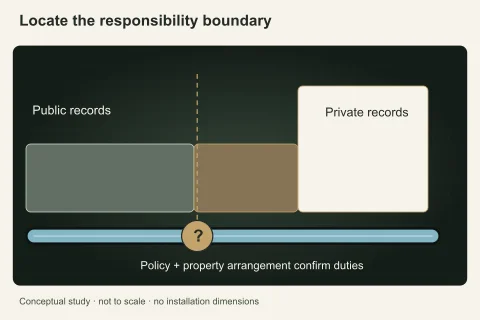
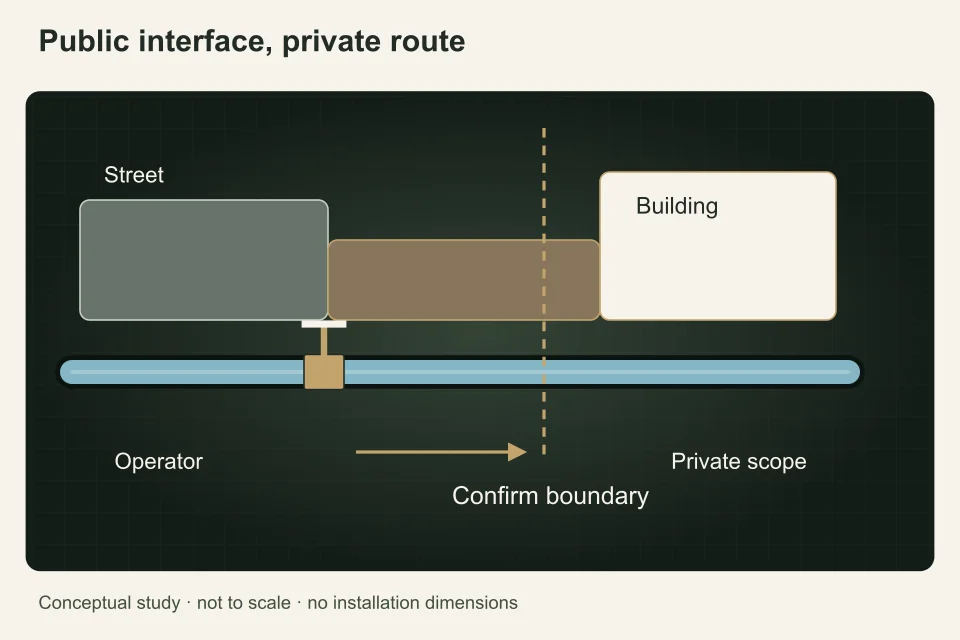
Begin with a sketch showing the public main if known, the property boundary, the visible service entry and any meter or accessible isolation point. Mark unknown sections rather than inventing the route. Ask the municipality for the available service information and the contractor what can be established at the property. Existing drawings may be useful but should not be treated as proof of current buried conditions.
Clarify whether the proposal concerns the private service, public infrastructure or interior supply piping. A leak near the property edge does not itself establish ownership. Record which party investigates each part and how the handoff works if a finding changes the assumed boundary.
Describe evidence without diagnosing from water use
Explain the symptom: loss of pressure, visible water, a utility notification or unusual metered consumption. Record when it started and whether other properties are affected. These observations help direct an assessment but cannot distinguish every buried leak, restriction or public-system condition. Do not repeatedly disturb a wet area or expose the service to look for a fault.
Ask what the initial investigation includes and what information will support the recommendation. An assessment may need utility coordination, records or professional locating before a route or method is settled. Separate any confirmed defect from a proposed capacity change, material upgrade or optional relocation.
Coordinate the City or Township connection process
The Township’s engineering resources provide distinct water connection and shutoff paths; the City publishes its own water-concern reporting information. Choose the authority for the property. A contractor’s private-property scope should identify what must be arranged with that authority rather than assume unrestricted access to its valves, main or road allowance.
Ask about permit and inspection responsibilities for the actual proposal, including any plumbing or civil work. Note whether a wider development permit already governs servicing. Keep the municipal application, contractor work and any public connection charges separate in the comparison. A utility charge is not a market price for a complete private replacement.
Prepare locating and surface-access decisions
BC 1 Call is an official starting point for locating member underground infrastructure before digging. Ask the contractor how private services and other unmarked infrastructure will also be addressed. A locate response is not a design drawing or a promise that every private line is known. Excavation, trench entry and drilling require appropriate professional planning; this guide provides no digging instructions.
List driveways, trees, retaining walls, patios, utility crossings and access restrictions along possible routes. Ask who obtains any permissions and what evidence establishes the route before equipment arrives. A method advertised as trenchless can still require access pits, connections and substantial restoration.
Compare replacement and reinstatement as one project
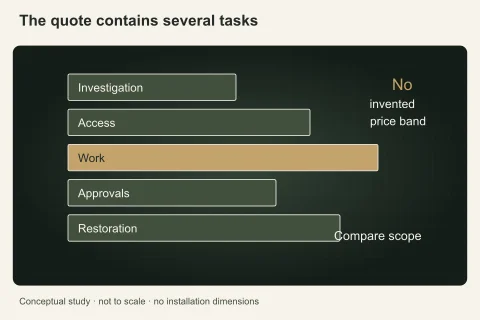
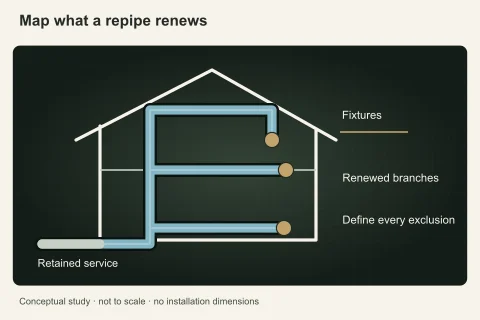
Request a route-based scope that identifies the pipe, fittings, connection work, interruption of water service, inspection and testing, disposal and surface reinstatement. Specify the finish standard for asphalt, concrete, soil and planting. “Backfill included” should not silently substitute for reinstating a driveway or restoring drainage around the house.
Ask which conditions could change the method or price and who approves the change. Keep the final material information, installed route, municipal references and accessible photographs together. If some original service remains, identify its endpoints. The closeout should allow a future owner or contractor to understand what was actually replaced.
Prepare a service-line request
Prepare a water service assessment brief that separates what you observed from what has not been established. State the observed symptom, available utility or service records, visible entry point and important surfaces along the possible route. Identify the municipality and avoid claiming an unverified ownership boundary. Include whether the home is occupied, who can authorize access, and whether a City or Township permit record already exists. Keep photographs limited to the affected system; omit tenant documents, entry codes and unrelated personal information. A useful request says what decision you need, rather than prescribing an unconfirmed repair.
LangleyPlumber.ca is a reference and human-reviewed request service, not a plumbing contractor or municipal office. A person reads a submitted request and replies; this does not book work, promise availability or provide emergency dispatch. Ask for a clearly located replacement extent, public/private responsibilities, service interruption plan and reinstatement standard. Use the request form for planning and scope clarification after urgent safety needs have been addressed.
Questions people ask
Does water on the lawn prove a private service leak?
No. Water can have several sources, and its surface location does not establish ownership of the affected pipe. Record the pattern from a safe location and report a suspected public-system issue to the appropriate municipality. Ask the investigation to identify the source and responsible system before pricing a private repair.
Is trenchless service replacement always less disruptive?
It may reduce some excavation, but the route, ground conditions, crossings and connection points still matter. Ask where access openings would be placed and what surfaces need restoration. Compare the complete project and its limitations rather than assuming a method name means no digging, no damage or a predictable price.
Does BC 1 Call locate all my private pipes?
Do not assume it does. The service notifies participating infrastructure owners about a proposed dig. Ask the excavating contractor how private lines and other unknown buried features will be identified. Keep locate responses and private-service information in the project file, and avoid treating a sketch or old drawing as current clearance to excavate.
Can the utility bill tell me the replacement cost?
No. Published utility rates concern municipal service charges, not a complete contractor scope for a buried private line. Replacement depends on the actual route, access, connection work, approvals and restoration. Keep utility or connection charges visible as separate items and obtain a written property-specific scope.
Sources and further reading
- Engineering Forms and Guides ↗ · Township of Langley. Checked 2026-10-02.
- Water Quality & Conservation ↗ · City of Langley. Checked 2026-10-02.
- BC 1 Call ↗ · BC 1 Call. Checked 2026-10-02.
- Utility Rates ↗ · Township of Langley. Checked 2026-10-02.
Confirm the current requirements with the responsible authority for the actual address and work. This reference does not replace site assessment or an official decision.