Name the actual system
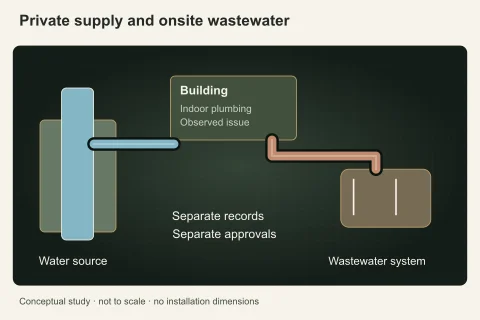
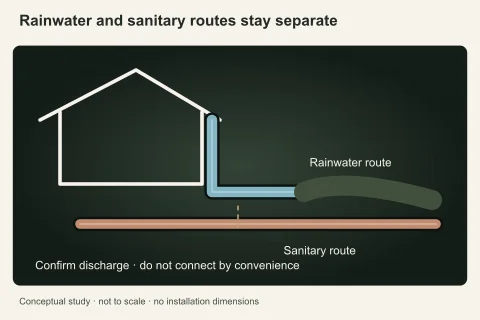
Start by separating potable-water supply, domestic hot water, sanitary wastewater, roof and perimeter drainage, and any private well or onsite sewerage system. These systems can be close together but do different jobs. An issue described only as “water” or “sewer” can be sent to the wrong assessment path.
Use available records to identify destinations and service connections. Mark unknowns rather than drawing an assumed route. A sketch with confirmed components, symptoms and unverified segments helps the municipality and contractor understand the question without becoming an installation or ownership drawing.
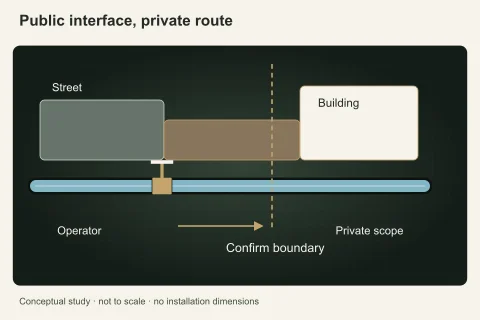
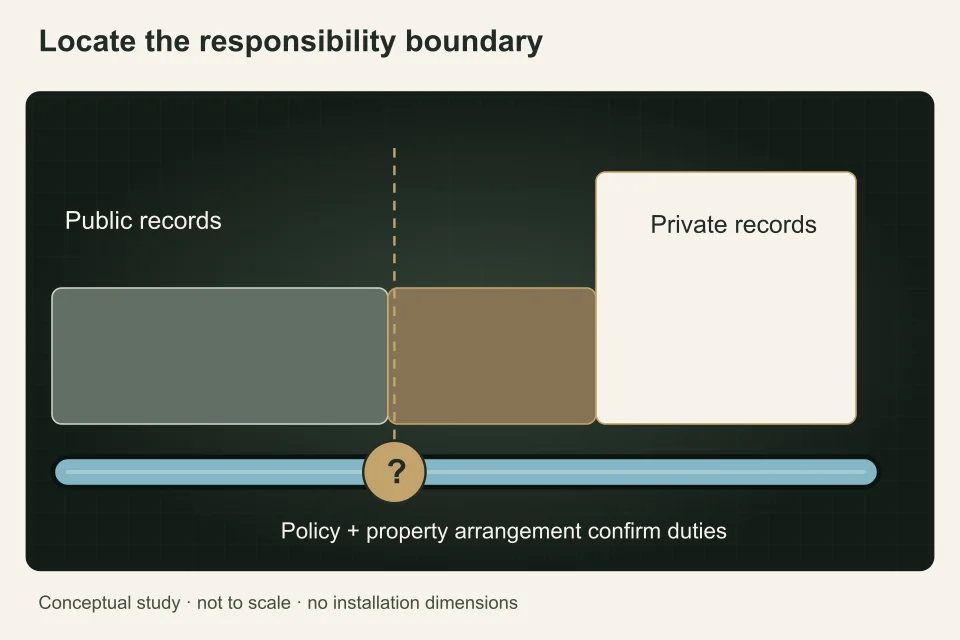
Confirm the public and private boundary
Ask the appropriate utility or engineering authority which asset and connection information applies to the property. The visible location of a leak, a meter or a property fence should not be used alone to assign every repair duty. Easements, shared services and earlier alterations may require specific records.
Request a clear division between public-system investigation and the contractor’s private scope. Record who controls isolation or connection work and what happens if the initial finding changes the assumed boundary. This is particularly important before excavation or a proposal that reaches the road allowance.
Keep municipal processes distinct
The Township’s engineering guides include separate water and sewer connection resources and a water-shutoff path. The City provides its own water reporting and contact information. Choose the authority for the address and ask which department handles the actual system, rather than treating a building permit as a utility service authorization.
Keep fees and charges in their correct categories. Annual utility rates, connection charges and a contractor’s repair price describe different things. Ask who obtains the current property-specific charges and includes them in the complete project budget. A published municipal figure should not be represented as the cost of replacing a private pipe.
Establish shared-building and rural interfaces
In a strata, determine the common-system and unit boundaries through the plan, bylaws and responsible manager. Repair duty, access authorization and final financial allocation may differ. In a tenancy, use the landlord’s repair-reporting process and identify the authorized contact rather than letting the affected occupant approve every shared-system change.
On a rural property, identify the actual drinking-water source and wastewater destination. Fraser Health’s private-water and onsite-sewerage resources provide different review paths from municipal connections. The contractor’s building-plumbing work should identify where it ends and where another specialist or authority needs to assess the system.
Record connections and restoration responsibilities
A buried connection proposal should identify its starting and ending points, locating, access, approvals, inspections and finished surface standard. BC 1 Call can help with member infrastructure information, but unknown private services need additional attention. Do not authorize excavation from an assumed route or use this guide as a digging procedure.
At completion, retain the final route and connection information, approvals, accessible photographs and any remaining original segment. If a public or shared-system task remains pending, identify its owner. A completed private invoice should not make an unresolved municipal or common-property interface disappear from the record.
Prepare an ownership and service brief
Prepare a utility and ownership planning brief that separates what you observed from what has not been established. Identify the system, municipality, available property and utility records, observed symptom and the boundary that remains uncertain. State whether a strata, tenant or rural service is involved. Include whether the home is occupied, who can authorize access, and whether a City or Township permit record already exists. Keep photographs limited to the affected system; omit tenant documents, entry codes and unrelated personal information. A useful request says what decision you need, rather than prescribing an unconfirmed repair.
LangleyPlumber.ca is a reference and human-reviewed request service, not a plumbing contractor or municipal office. A person reads a submitted request and replies; this does not book work, promise availability or provide emergency dispatch. Ask which party confirms each boundary and which work is within the contractor’s authorized scope. Use the request form for planning and scope clarification after urgent safety needs have been addressed.
Questions people ask
Does the property line always settle responsibility?
Do not assume a universal boundary from a fence or sketch. Ask the applicable utility and consult the property’s service records, easements or shared-system information. The guide helps separate the questions but does not issue a legal ownership ruling or determine who ultimately pays for a disputed repair.
Can a public utility concern and private repair happen together?
They may need coordination, but the scopes and authorizations should remain distinct. Record the municipal report or project reference and the private contractor’s boundary. Ask who controls the connection or isolation and how the parties communicate if evidence changes the initial assumption about the affected asset.
Are annual utility charges the price of a connection repair?
No. Annual service charges, connection-related charges and private construction prices are different categories. Obtain current property-specific information from the correct municipality and identify it separately in the project budget. A published rate is not a contractor quote or a complete replacement scope.
What if the property uses a well or septic system?
Identify those systems and obtain their current records before applying municipal assumptions. Water-quality and onsite-sewerage questions may involve Fraser Health and appropriate specialists. Keep building plumbing, source or treatment work and wastewater-system alterations as distinct scopes with clear interfaces and completion records.
Sources and further reading
- Engineering Forms and Guides ↗ · Township of Langley. Checked 2026-10-02.
- Water Quality & Conservation ↗ · City of Langley. Checked 2026-10-02.
- Division of repair duties in a strata ↗ · Province of British Columbia. Checked 2026-10-02.
- Onsite sewerage resources for property owners and authorized persons ↗ · Fraser Health. Checked 2026-10-02.
- BC 1 Call ↗ · BC 1 Call. Checked 2026-10-02.
Confirm the current requirements with the responsible authority for the actual address and work. This reference does not replace site assessment or an official decision.