Distinguish the symptom and its location
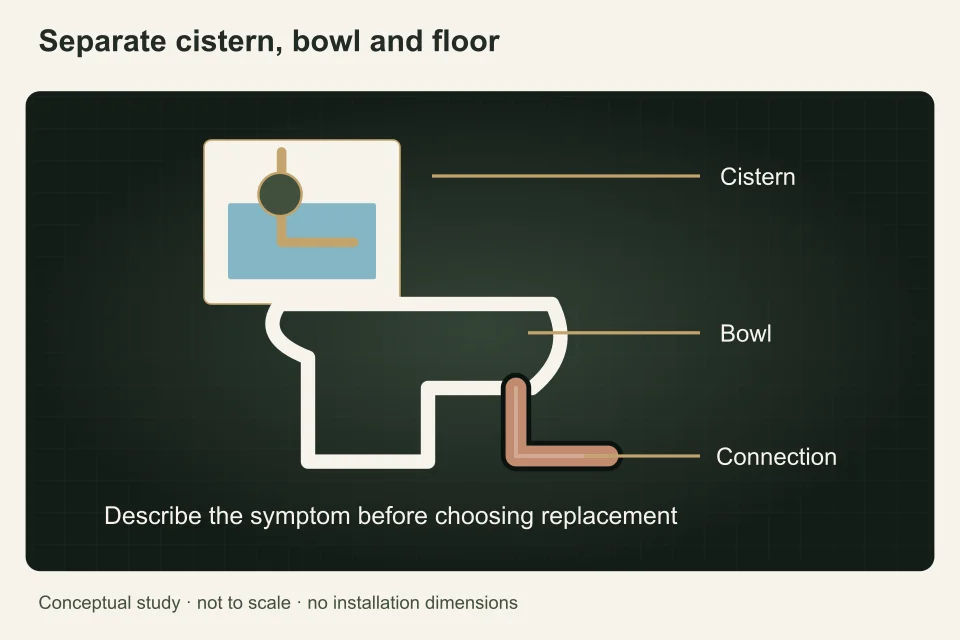
A toilet can lose water through its internal components without leaving a puddle, while water on the floor can come from a supply connection, tank or another nearby source. Record when the sound or wetting occurs and whether the bowl level changes unexpectedly. Explain whether the fixture rocks or whether the floor feels affected, but do not move it to test the connection.
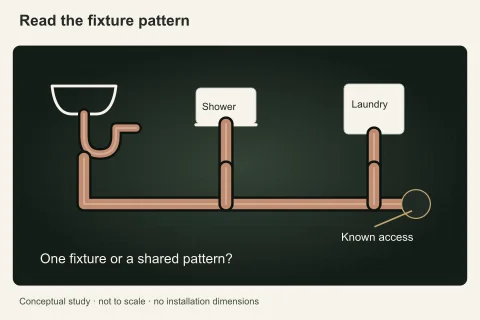
Repeated poor flushing may involve the fixture, its connection or drainage beyond it. Tell the contractor whether other fixtures are also slow and whether the problem began after a replacement or renovation. This helps define whether the first task is fixture assessment, drainage investigation or investigation of surrounding damage.
Make repairability an explicit question
Provide the model information or a photograph of accessible manufacturer markings if available. Ask whether the failed component can be identified and whether a compatible replacement is available. A generic parts assumption can overlook a concealed tank, proprietary actuator or unusual fixture. The contractor should explain the reason for a repair or complete replacement recommendation.
Compare alternatives on the same basis: parts, labour, any removal, the disposal of the old fixture and restoration of the connection. Replacing a functioning fixture for appearance or comfort is a separate choice from resolving a leak. Document both purposes so an optional upgrade is not confused with the minimum repair.
Look beyond the porcelain
The visible toilet is only one part of the scope. Its floor connection, accessible isolation valve and surrounding surface may affect the work. Ask how the contractor handles a damaged connection or deteriorated floor discovered after removal, and who can approve that additional work. Photos of the current floor and fixture location help preserve a record of pre-existing damage.
Do not assume a new toilet resolves a recurring sewer obstruction or floor movement. If the quote excludes building repairs, identify who examines and restores the floor before reinstalling equipment. A toilet in a basement or strata unit may also require careful coordination of access and responsibility for a shared system.
Confirm fit before ordering a fixture
For a planned replacement, give the contractor the proposed product information and discuss clearance, existing connection position, water supply access and future maintenance. A showroom choice is not a complete installation specification. Ask whether the quoted product and connection details have been checked at the property rather than selected from a photograph alone.
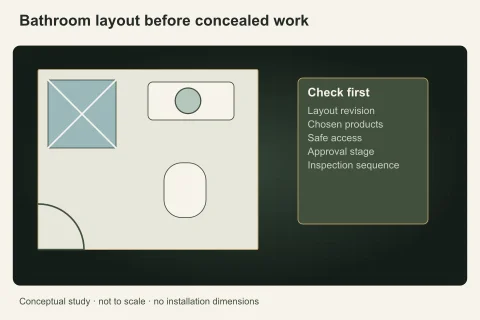
Accessibility and comfort should be considered with the whole room: door swing, transfer space, nearby obstructions and the needs of users. Avoid relying on a product label as evidence that the finished room will be suitable. If fixtures are moving, the project becomes a plumbing alteration and may overlap with renovation permit and inspection requirements.
Check responsibility and the final result
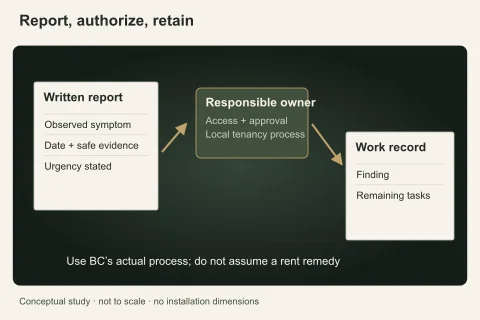
For a tenancy, report the problem through the landlord’s repair process and preserve a dated description. For strata, check whether the unit owner can authorize the work and whether any shared shutoff needs approval. A fixture replacement does not automatically authorize changes to a common line. Municipal permit applicability should be confirmed with the relevant City or Township when the layout or system changes.
The completion record should identify the fixture or parts installed, checks performed, remaining limitations and warranty terms supplied by the contractor. Keep product documentation and the invoice together. Ask about any return visit and who handles finish damage instead of treating “toilet installed” as a complete closeout statement.
Prepare a toilet-work request
Prepare a toilet work brief that separates what you observed from what has not been established. Include the symptom, fixture type, number of affected bathrooms, other slow drains and whether a replacement product is already selected. Note any floor damage without opening the connection. Include whether the home is occupied, who can authorize access, and whether a City or Township permit record already exists. Keep photographs limited to the affected system; omit tenant documents, entry codes and unrelated personal information. A useful request says what decision you need, rather than prescribing an unconfirmed repair.
LangleyPlumber.ca is a reference and human-reviewed request service, not a plumbing contractor or municipal office. A person reads a submitted request and replies; this does not book work, promise availability or provide emergency dispatch. Ask for an itemized repair or replacement scope and a clear allowance process for concealed connection or floor defects. Use the request form for planning and scope clarification after urgent safety needs have been addressed.
Questions people ask
Can a running toilet explain higher water use?
It can be a possible contributor, but a bill change alone does not identify the source. Record what you hear or observe and compare the billing period with occupancy and other water use. Ask for a fixture assessment and use the utility’s own reporting process for suspected meter or public-system issues.
Is a toilet leak always the seal at the floor?
No. Water at the base does not establish the source; supply fittings, tank components, condensation or nearby plumbing may need consideration. Do not remove the toilet as a diagnostic experiment. Describe when wetting happens and ask how the professional will distinguish causes before pricing the repair and any floor restoration.
Does moving the toilet change the permit question?
Yes, moving a fixture changes the scope beyond a straightforward repair or replacement in its existing location. Ask the building department for the property’s municipality about the proposed alteration and any related renovation permit. The Township’s guidance should not be treated as Langley City’s permit decision.
Can I buy the toilet before requesting a quote?
You can identify a preferred product, but have the contractor confirm fit and included components before committing. The installation quote should say who supplies it, who handles returns and what happens if the existing connection or floor needs work. Keep the product purchase separate from an assumed complete installation price.
Sources and further reading
- Plumbing Permit Application Guide ↗ · Township of Langley. Checked 2026-10-02.
- Applications, Forms & Permits ↗ · City of Langley. Checked 2026-10-02.
- Repairs and maintenance ↗ · Province of British Columbia. Checked 2026-10-02.
Confirm the current requirements with the responsible authority for the actual address and work. This reference does not replace site assessment or an official decision.