Describe the water before naming the fault
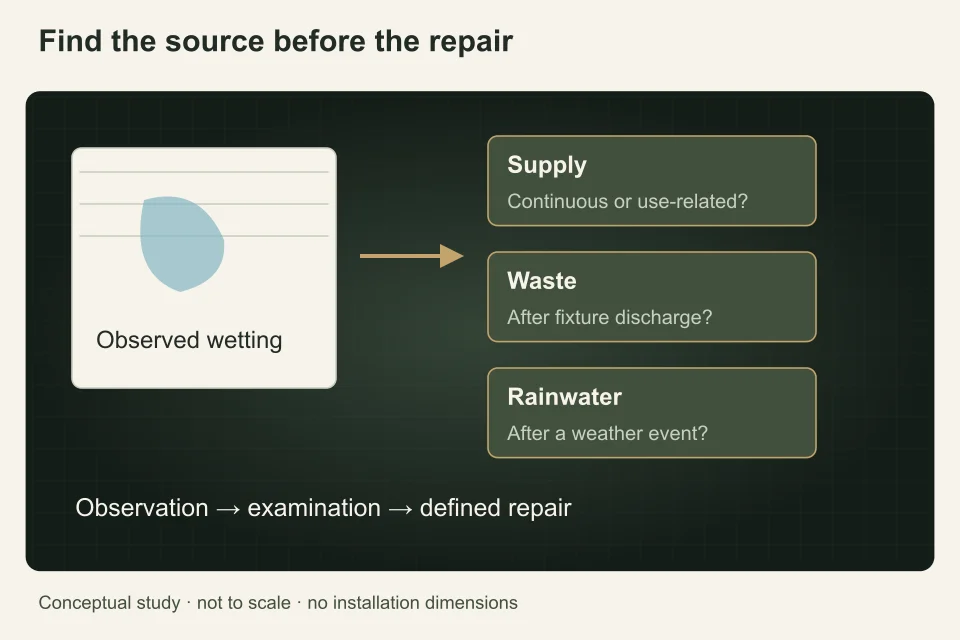
Write down where water first appeared and what was happening at the time. A mark below a bathroom is not proof that the toilet is leaking: the nearby shower, supply connections, waste line and exterior envelope may need consideration. Note whether water appears continuously, after a fixture is used or during rain. Describe colour and odour without assuming that apparently clear water is safe. If more than one room is affected, list the order in which the signs appeared.
The valuable distinction is an observed event versus an explanation. “The ceiling became wet after the shower ran” helps an investigation; “replace the shower drain” may prematurely exclude other causes. Photograph accessible staining from a dry location and preserve earlier repair invoices.
Keep the investigation safe and bounded
Do not enter standing water near electrical equipment, remove a wet ceiling or open a wall to find the source. Increasing water, an unstable ceiling, sewage or a suspected electrical hazard requires an appropriate urgent response, not an online planning request. Public Safety Canada’s flood guidance explains why floodwater and electricity require special care.
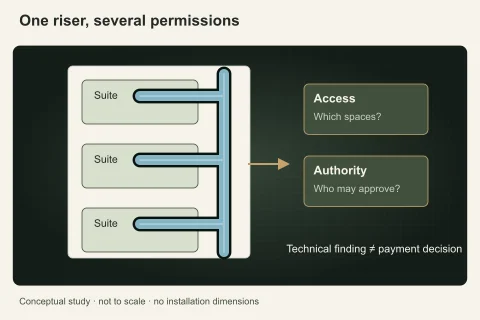
For an isolated accessible drip, tell the attending professional whether a known local isolation point exists. Do not force corroded valves or experiment with a shared building shutoff. In a townhouse or apartment, the manager may need to coordinate access to the unit above, common service space or another owner’s suite.
Ask what the first visit will establish
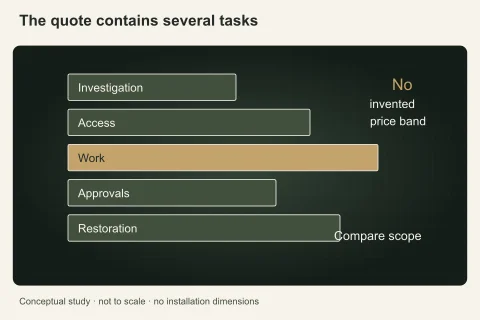
An investigation scope should say whether the visit covers visual assessment, controlled testing, accessible connections and a written finding. Ask separately about opening finished surfaces, leak-location equipment and restoring those openings. A contractor cannot inspect a concealed pipe simply because a photograph looks convincing. The initial finding may narrow the next step rather than produce a complete price for every possible repair.
Agree who can approve additional investigation and how that approval will be recorded. Request a distinction between the confirmed failed component, other plausible sources and unrelated older defects. This is particularly important when an insurer, landlord or strata corporation needs evidence about cause and affected areas.
Separate pipe repair from damage restoration
Stopping a source and restoring the room are separate deliverables. A plumbing quote may cover a fitting replacement but exclude drying, insulation, plasterboard, paint, tile and mould assessment. Ask which party leaves the opening accessible for further inspection and which party makes it safe. Do not assume the same contractor coordinates all building trades or an insurance claim.
In a strata property, establish who arranges the source investigation before deciding who ultimately pays. The location of a stain does not determine responsibility for the concealed pipe. Read the building’s plan, bylaws and repair history alongside the strata plumbing guide; approval, repair duty and insurance allocation are distinct questions.
Check the local authority when scope changes
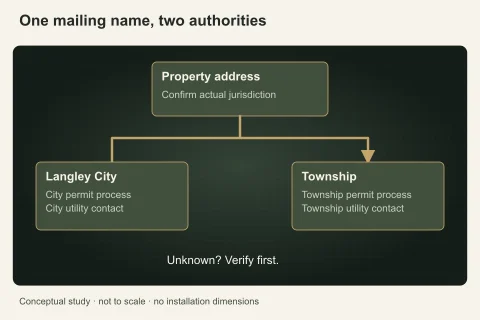
A small repair can become a broader alteration once the source is exposed. The Township publishes separate plumbing and repiping application paths; Langley City has its own permit entry point. Ask the relevant building department about the actual proposed work, not simply whether “a leak” needs a permit. An existing renovation permit may already describe the plumbing scope, but its record should be checked.
Keep the diagnosis, permit question and final design separate. Replacing one failed accessible fitting does not establish that the remaining house piping needs replacement. Conversely, an invoice saying “leak repaired” is insufficient if several inaccessible branches remain untested. Record the contractor’s limitations and any recommended follow-up observations.
Prepare the request and retain the findings
Prepare a leak assessment brief that separates what you observed from what has not been established. List the affected room, the timing of wetting, any safe isolation already performed and whether another unit is involved. Include whether the home is occupied, who can authorize access, and whether a City or Township permit record already exists. Keep photographs limited to the affected system; omit tenant documents, entry codes and unrelated personal information. A useful request says what decision you need, rather than prescribing an unconfirmed repair.
LangleyPlumber.ca is a reference and human-reviewed request service, not a plumbing contractor or municipal office. A person reads a submitted request and replies; this does not book work, promise availability or provide emergency dispatch. Ask for a cause finding, the repaired component, photographs of accessible work and a clear list of unfinished restoration tasks. Use the request form for planning and scope clarification after urgent safety needs have been addressed.
Questions people ask
Can a plumber diagnose a leak from my ceiling photograph?
A photograph can show location and damage, but usually cannot establish the hidden source. Explain what fixtures or weather conditions preceded the wetting and whether another unit is above. Ask what the initial investigation includes and who authorizes openings. Avoid buying a prescribed replacement before the source is confirmed.
Should I ask the City or Township?
Use the authority for the property address, not the word Langley in its mailing address. The two municipalities have different application routes. For private building plumbing, start with the appropriate permit department when alteration is proposed; for a suspected public water incident, use that municipality’s service reporting channel.
Who repairs the ceiling after the leak?
That depends on the written scope and any separate insurance, landlord or strata arrangements. Ask who makes the area safe, investigates moisture, dries affected material and restores finishes. A plumbing repair price should not be read as a complete water-damage restoration price unless those tasks are expressly included.
Does this request arrange an emergency visit?
No. This is a human-reviewed planning request, without a response-time or attendance promise. For worsening flooding, electrical danger, sewage exposure or another immediate hazard, use the appropriate emergency, utility or building-management channel. After the urgent situation is controlled, the request can help document the remaining investigation or repair scope.
Sources and further reading
- Floods — Get prepared ↗ · Public Safety Canada. Checked 2026-10-02.
- Plumbing and Sprinklers ↗ · Township of Langley. Checked 2026-10-02.
- Applications, Forms & Permits ↗ · City of Langley. Checked 2026-10-02.
Confirm the current requirements with the responsible authority for the actual address and work. This reference does not replace site assessment or an official decision.