Separate location from legal responsibility
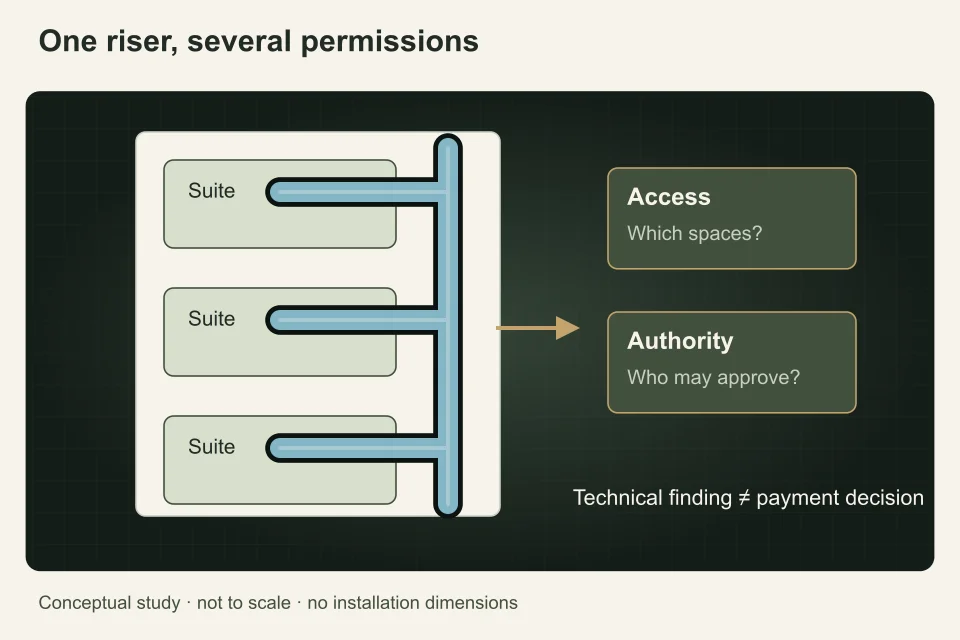
A pipe passing through a suite may serve that suite, neighbouring units or a shared building system. A stain on one owner’s ceiling therefore does not establish the repair duty or financial allocation. Collect the relevant strata plan, bylaws, alteration agreement and earlier repair records before making that determination. Use the property manager or authorized council contact to coordinate the review.
British Columbia’s strata guidance distinguishes common-property maintenance from duties within strata lots and points to the need for clearly defined responsibilities. This page is a planning reference, not a legal determination about a particular pipe. Disputed duties or insurance questions may need independent professional advice.
Authorize a limited first investigation
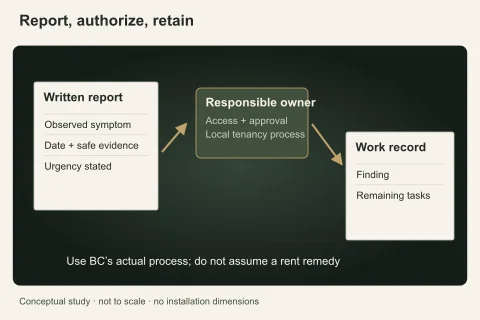
Define the initial task before authorizing a building-wide repair. The first scope might identify the source, affected system, accessible condition and next access required. Specify who can approve opening a finish, entering another suite or examining a common service area. A contractor should know which person has spending authority and which observations must be reported before work expands.
Keep immediate source control separate from later repair allocation. A useful report identifies what was confirmed, what remains uncertain and how the investigation was limited. Preserve photographs and relevant system references so the next decision is based on evidence rather than competing descriptions of the same incident.
Coordinate resident access and shutdowns
Shared plumbing work can affect people who are not the requesting owner. List the units and common areas that may need access, the manager coordinating notices and any vulnerable household needs. Do not circulate entry codes, personal schedules or resident records through an open planning tool. Give the contractor an authorized contact for the actual visit.
Ask how the scope handles an unavailable unit, inaccessible valve or longer interruption discovered during work. A unit-level fixture repair and a riser replacement need different coordination. Agree how occupants receive updates and what service remains available, without relying on a general promise of uninterrupted water.
Read contractor scopes as building scopes
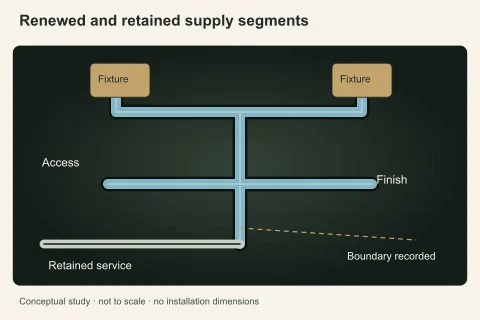
Identify whether the proposal covers a branch, riser, common plant or several units. Include opening and reinstating finishes, fire separations, insulation, disposal, inspection and documentation. If separate trades are involved, assign each interface and its approval process. A lower pipe-installation price can omit a large amount of work required to leave the building complete.
For repiping, compare stages, shutdown boundaries and retained components as well as materials. The Township has a distinct apartment-repiping application path, while City properties follow the City process. Permit preparation and inspection coordination should be allocated in writing alongside the residents’ access arrangements.
Build a record that survives council changes
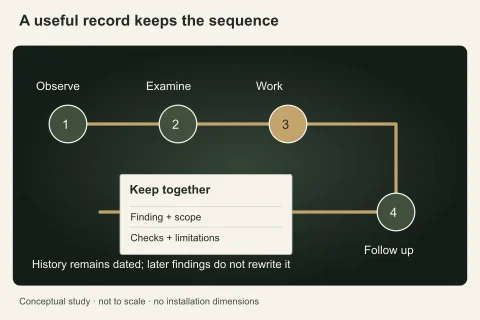
A strata’s maintenance record should retain system descriptions, drawings, invoices, accessible photographs, permit references, test reports and identified exclusions. Keep the confirmed installation separate from proposals that were not carried out. Record who approved a change and why the replacement boundary differed from the original scope.
Connect recurring incidents to the same system record rather than creating unrelated files by unit number alone. A later council needs to know whether a leak was an isolated fitting failure, an unexamined concealed branch or part of a broader renewal project. The record can inform future planning without promising that one repair removes every risk.
Prepare an authorized strata request
Prepare a strata plumbing brief that separates what you observed from what has not been established. State your role, the affected unit or common area, the manager’s contact route and what work you are authorized to request. Describe the observed issue without deciding disputed ownership. Include whether the home is occupied, who can authorize access, and whether a City or Township permit record already exists. Keep photographs limited to the affected system; omit tenant documents, entry codes and unrelated personal information. A useful request says what decision you need, rather than prescribing an unconfirmed repair.
LangleyPlumber.ca is a reference and human-reviewed request service, not a plumbing contractor or municipal office. A person reads a submitted request and replies; this does not book work, promise availability or provide emergency dispatch. Ask for a source finding, access limitations, approved repair scope and documents suitable for the building’s maintenance record. Use the request form for planning and scope clarification after urgent safety needs have been addressed.
Questions people ask
Does the unit owner always pay for a pipe inside the suite?
No universal conclusion follows from that location alone. The strata plan, bylaws, system served and other legal or insurance facts can matter. Establish who arranges the investigation and obtain a clear finding before deciding allocation. The provincial repair-duty guide is a starting point, not a decision about your particular property.
Can a tenant request work on a common riser?
A tenant can report the problem, but should not assume authority to alter common services or approve building expenditure. Use the landlord and strata manager’s repair and emergency channels. Preserve a dated description and identify immediate hazards; planned work should have a clearly authorized decision-maker and resident coordination.
What should a repiping proposal include for a strata?
Define the system boundary, units served, staging, access, shutdowns, permits, restoration and closeout records. Ask which components remain original and how changes are approved. A material specification alone does not explain the disruption or complete scope. Compare those interfaces before choosing between building-wide proposals.
Is this site assessing strata insurance responsibility?
No. The request service helps organize a plumbing issue and proposed investigation. It does not decide coverage, deductibles, chargebacks or legal repair duties. Preserve relevant evidence and seek the insurer, manager or appropriate independent adviser for those questions. A human reply is not an insurance or legal ruling.
Sources and further reading
- Division of repair duties in a strata ↗ · Province of British Columbia. Checked 2026-10-02.
- Plumbing and Sprinklers ↗ · Township of Langley. Checked 2026-10-02.
- Applications, Forms & Permits ↗ · City of Langley. Checked 2026-10-02.
Confirm the current requirements with the responsible authority for the actual address and work. This reference does not replace site assessment or an official decision.