Use property evidence rather than the postal label
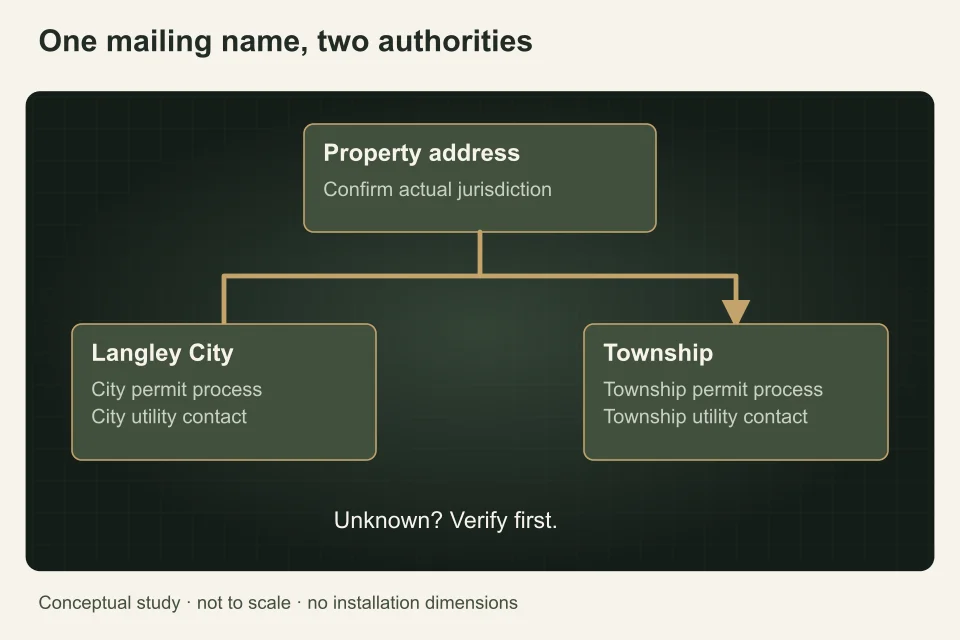
Start with the property tax notice, municipal account, permit record or an official property map. A postal address containing Langley is not enough to choose an authority. If the record is unclear, ask the municipality to confirm the address before submitting a project application. The site’s selector allows an unknown choice rather than inventing an answer.
Keep neighbourhood description separate from jurisdiction. A name familiar to a resident may help explain location, but it should not determine which office approves plumbing or operates a utility. Record the confirmed authority in the project brief so the designer, contractor and requester work from the same starting point.
Choose the building and plumbing path
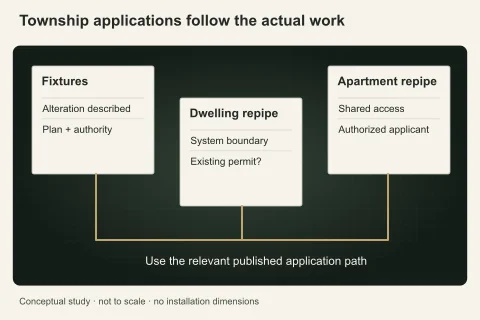
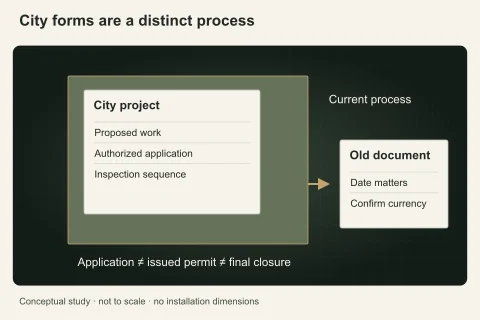
For Township properties, the official Plumbing and Sprinklers page provides separate paths for fixture work, dwelling repiping and apartment repiping. For City properties, the Applications, Forms & Permits page lists the City plumbing entry, and its Building Permits page provides broader project guides. These are different application systems, not two links to a single Langley permit.
Explain the proposed change when asking about approvals: retained or moved fixtures, changed piping, additional equipment and any wider renovation. Avoid requesting a generic exemption for “plumbing”. The authority needs the actual scope and any existing building permit reference to clarify what process applies.
Choose the utility and infrastructure path separately
Building permits and utility service requests answer different questions. A public water concern, a connection proposal or a planned municipal shutoff can involve engineering or operations rather than the building counter. The Township’s engineering guides and the City’s water and contact pages identify their own starting points.
Ask which department handles the actual system and preserve any report number. Do not presume that a municipal issue and a private contractor’s repair share the same authorization or ownership boundary. A planning brief can record both paths, but should not assign liability based only on the location of a symptom.
Recognize provincial and shared-building responsibilities
Some project questions extend beyond the municipality. Regulated gas or electrical work has a separate Technical Safety BC path. Private drinking water and onsite sewerage may involve Fraser Health. A strata manager or landlord may be the authorized party for access and work approval even when the municipality is known.
Make a responsibility list: who approves the project, who can provide access, who arranges utility coordination and who receives completion records. A contractor can help clarify its role, but the site does not determine legal duties or certify another party’s authority. Keep unresolved responsibility visible until the appropriate source confirms it.
Check the date and status of the source
Official documents can be current entry points or dated reference material. The City’s linked Building and Plumbing Bylaw consolidation identifies an older consolidation date and expressly warns about currency. It should not be used alone to announce a present-day exemption or fee. Ask the City to confirm how the current rules apply to the work.
Similarly, a prior permit or neighbouring property’s approval may describe a different project. Save the source URL, date reviewed and the actual advice received. This makes a later scope review more useful than an undated note claiming that “Langley does not require a permit” without identifying either municipality.
Prepare an authority-confirmed request
Prepare a authority and permit planning brief that separates what you observed from what has not been established. State the confirmed municipality or mark it unknown, the property type, proposed work and any existing permit or utility reference. Keep private account identifiers out of unnecessary attachments. Include whether the home is occupied, who can authorize access, and whether a City or Township permit record already exists. Keep photographs limited to the affected system; omit tenant documents, entry codes and unrelated personal information. A useful request says what decision you need, rather than prescribing an unconfirmed repair.
LangleyPlumber.ca is a reference and human-reviewed request service, not a plumbing contractor or municipal office. A person reads a submitted request and replies; this does not book work, promise availability or provide emergency dispatch. Ask which official process and authorization questions must be resolved before a contractor scope is finalized. Use the request form for planning and scope clarification after urgent safety needs have been addressed.
Questions people ask
Can the website choose my municipality automatically?
No. The authority tool uses your explicit City, Township or unknown selection. It does not infer jurisdiction from IP, device location or an approximate map position. Confirm the property through official records, then use the appropriate linked authority resources. Unknown is a useful result when more evidence is needed.
Are the City and Township plumbing permits the same?
No. They have separate application resources and administer their own processes. Describe the actual proposal to the authority for the property. A rule, fee or exemption found on the Township website should not automatically be applied to a Langley City address, or vice versa.
Does choosing the municipality settle pipe ownership?
No. It identifies the relevant local authority but does not determine the legal boundary for every service, common pipe or easement. Ask for the applicable utility information and property records. Strata, tenancy and private-system responsibilities may need separate review even after the municipality is confirmed.
What should I do when an official PDF looks old?
Retain it as dated reference material and follow the current official entry point to confirm applicability. Do not silently update an old bylaw, fee or exception by assumption. Record the date and the authority’s response about the actual scope, particularly before committing to an alteration or connection project.
Sources and further reading
- Plumbing and Sprinklers ↗ · Township of Langley. Checked 2026-10-02.
- Applications, Forms & Permits ↗ · City of Langley. Checked 2026-10-02.
- Building and Plumbing Bylaw 2498 — dated consolidation ↗ · City of Langley. Checked 2026-10-02.
- Permits ↗ · Technical Safety BC. Checked 2026-10-02.
Confirm the current requirements with the responsible authority for the actual address and work. This reference does not replace site assessment or an official decision.