Use City resources for a City address
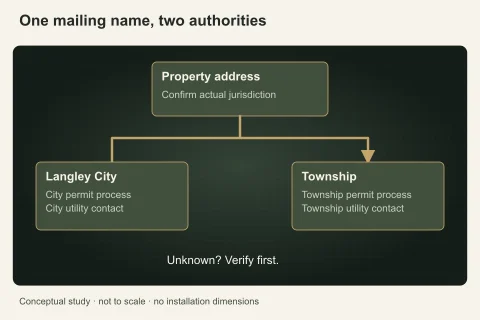
The City’s Applications, Forms & Permits page lists Plumbing Permit under Development Services. Its Building Permits page provides project guides, including dwelling alterations and secondary suites. These resources establish the City starting point; they should not be replaced with the Township’s separate online application route.
Confirm jurisdiction using a property record, then describe the actual project. A mailing address alone may not answer the City-versus-Township question. Keep the existing project reference and the proposed-system boundary with the request so the City can clarify the appropriate path rather than respond to a vague description of “some plumbing”.
Treat the dated bylaw consolidation carefully
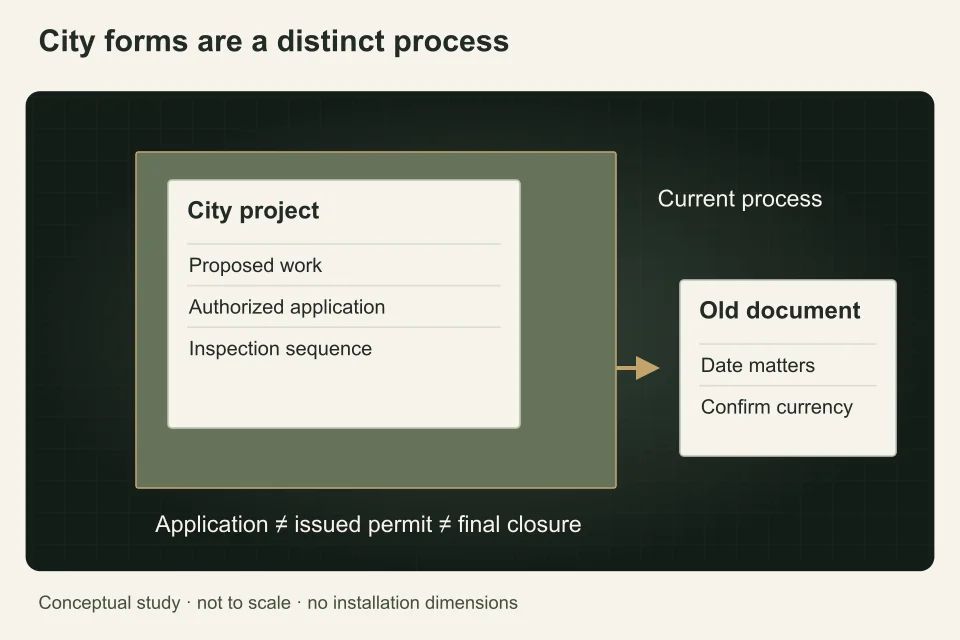
The City’s linked Building and Plumbing Bylaw PDF identifies an older consolidation and expressly disclaims that its contents are current. It is useful context, but this site does not use it to certify present permit exceptions or fees. Ask the City how the current rules apply to the specific work before relying on an old clause.
Save the date and source of any advice received. If a contractor cites an exemption, ask which current authority or confirmation supports that conclusion. A historical document, neighbouring permit or previous owner’s note can inform the question without resolving the current project’s approval requirements.
Describe what changes in the system
Prepare a fixture and route schedule showing retained components, replacements in place, relocations and additions. Explain whether the work concerns water supply, drainage, hot-water equipment or a broader renovation. The scope may change after assessment, so make concealed uncertainties visible rather than submitting an assumed complete design.
Keep plumbing work distinct from regulated gas or electrical interfaces. A City building or plumbing discussion does not automatically settle those other approvals. Assign the appropriate trade and record responsibility for each interface in the project agreement, especially when domestic hot-water equipment or appliances are changing.
Coordinate the applicant and project team
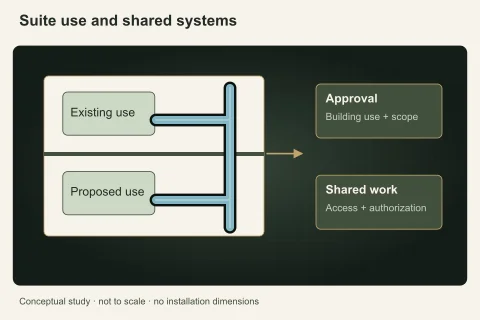
Identify who prepares the application, responds to review questions and coordinates inspection. A homeowner, designer and contractor should not each assume that another party owns the process. In a strata or tenancy, establish authority to propose work and provide access before treating an occupant’s planning request as approval to alter common services.
Give all relevant parties the same layout and approved scope version. If a product selection or hidden finding changes the work, document the change and ask the City how the record must be updated. Consistent project information avoids a finished installation that no longer matches the drawing being reviewed.
Preserve access for the required checks
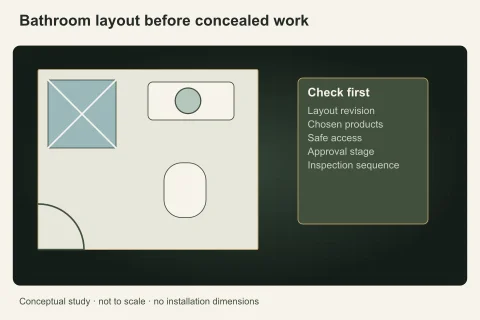
Ask the City about the actual inspection sequence and responsibility for arranging it. Plumbing below a slab or behind a finish may need review before the area is covered. The contractor and restoring trade need the current inspection status, not an assumption that a booked date means approval occurred.
At closeout, retain the applicable permit and inspection references, final scope, product information and contractor documentation. Mark retained plumbing, uncompleted work and any unresolved findings. Approval for one alteration is not a current condition report for every original component at the property.
Prepare a City project brief
Prepare a City permit planning brief that separates what you observed from what has not been established. State the City-confirmed address, proposed fixture and route changes, existing project record and responsible applicant. Identify any strata or regulated-trade interface. Include whether the home is occupied, who can authorize access, and whether a City or Township permit record already exists. Keep photographs limited to the affected system; omit tenant documents, entry codes and unrelated personal information. A useful request says what decision you need, rather than prescribing an unconfirmed repair.
LangleyPlumber.ca is a reference and human-reviewed request service, not a plumbing contractor or municipal office. A person reads a submitted request and replies; this does not book work, promise availability or provide emergency dispatch. Ask for current applicability and document requirements, with inspection and completion records assigned to a named project role. Use the request form for planning and scope clarification after urgent safety needs have been addressed.
Questions people ask
Can I use Township permit exceptions for a City project?
No. They are separate municipal processes. Use the City’s official application resources and ask about the actual scope. A rule or listed exception on the Township website is not a City decision. Record current City confirmation where the work or source document leaves uncertainty.
Why does this guide flag the City bylaw PDF?
Its linked consolidation is dated and expressly warns that currency is not warranted. The appropriate response is to confirm present applicability through the City, not silently treat the historical text as a current exemption. The guide preserves the document’s limitation so readers can assess the evidence accurately.
Who should arrange inspections?
Allocate that role in the project agreement and confirm the actual City process. The applicant and contractor should know which stages need review and how restoring trades receive the result before covering work. Keep the completed inspection reference rather than only a note that someone planned to book it.
Does this request submit a City permit?
No. It is a human-reviewed planning request to this reference service. Municipal applications go through the City’s own process, and professional design or applicant authorization may be needed. The website does not grant approval, establish exemptions or act as the City’s permit office.
Sources and further reading
- Applications, Forms & Permits ↗ · City of Langley. Checked 2026-10-02.
- Building Permits ↗ · City of Langley. Checked 2026-10-02.
- Building and Plumbing Bylaw 2498 — dated consolidation ↗ · City of Langley. Checked 2026-10-02.
- Permits ↗ · Technical Safety BC. Checked 2026-10-02.
Confirm the current requirements with the responsible authority for the actual address and work. This reference does not replace site assessment or an official decision.