Confirm the suite approval path first
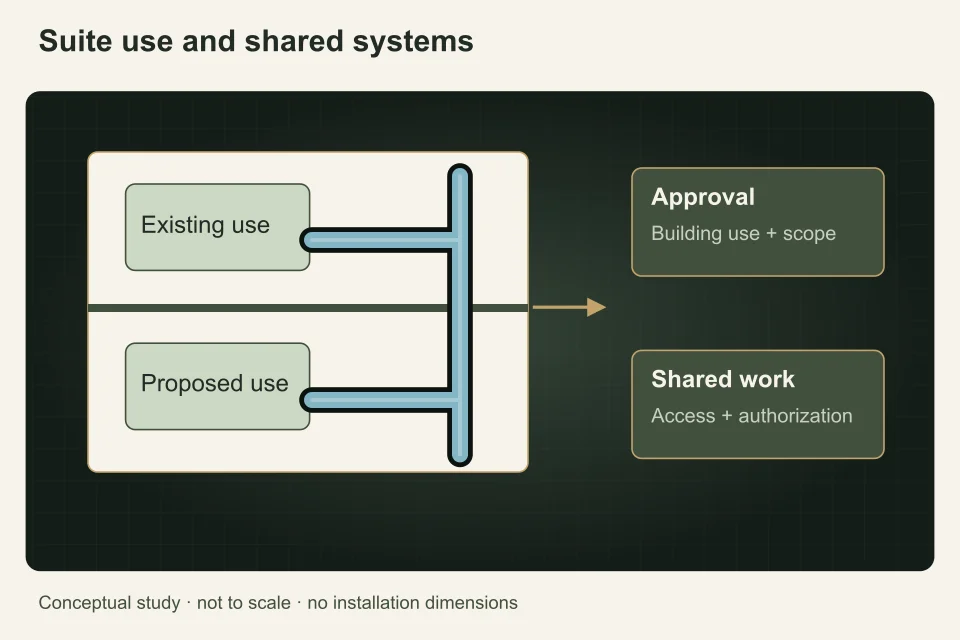
The Township states that secondary suites require a building permit and provides a dedicated suite path. Langley City publishes separate secondary-suite application resources. A basement finish, an existing rental arrangement and an approved secondary suite should not be treated as interchangeable statuses. Ask the correct municipality which records and approvals apply to the actual property.
Keep plumbing feasibility separate from zoning or occupancy approval. A contractor’s ability to install a sink does not establish that a suite may lawfully be created or occupied. Retain the municipal advice, submitted layout and permit scope together so later trade proposals refer to the same authorized project.
Assess the whole supply and drainage arrangement
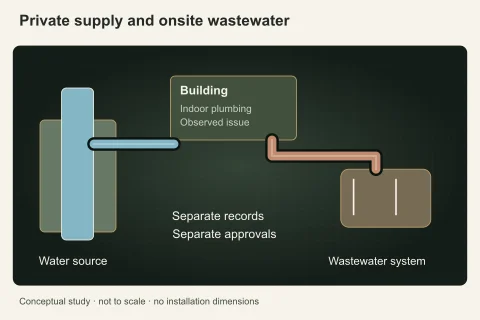
Prepare a fixture schedule for both the main dwelling and proposed suite. Explain the existing water source, wastewater destination and available system records. Ask the professional what must be assessed before adding fixtures or altering routes. A new suite can share infrastructure whose condition or arrangement has not been established by looking only at the basement.
For rural properties, do not presume municipal sewer capacity or approval. Onsite sewerage and private-water questions may involve Fraser Health and other appropriate professionals. Keep those system reviews visible in the planning process rather than adding them as an afterthought once the interior plumbing price has been selected.
Plan hot water and isolation as shared services
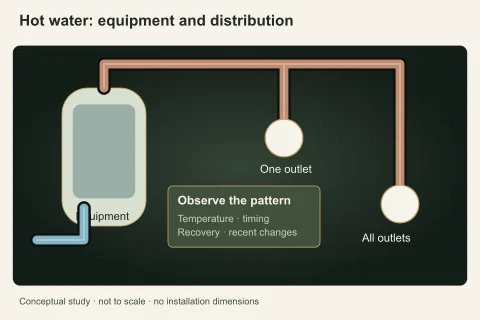
Identify whether domestic hot water will be shared, separately provided or connected to a combined heating arrangement. Ask the contractor to explain its equipment selection basis and any gas or electrical interfaces. Do not turn a household fixture count into a self-designed capacity calculation or an assumption that the existing equipment is suitable.
Discuss accessible isolation and future maintenance with both occupancy and ownership in mind. A repair in one dwelling may interrupt another. Define who can authorize shutdowns, who coordinates notice and how later service personnel obtain access without sharing private entry details in public documents.
Coordinate concealed work with building requirements
New supply, drainage and venting routes can interact with framing, ceiling assemblies and other services. Ask the project designer and trades how those interfaces will be coordinated and which work needs review before it is covered. Plumbing work cannot be planned independently of the building elements it passes through.
Allocate inspection arrangements, photographs and record delivery. If the project changes during construction, update the layout and authorization record rather than relying on an informal instruction. Safe opening and potentially hazardous older materials also need assessment; the project should not expose finishes casually to chase a quicker plumbing estimate.
Budget ongoing ownership and records
Distinguish construction costs from utility charges and ongoing maintenance. The Township publishes suite-related utility information, but a published charge is not a plumbing construction price or proof that a suite is approved. Ask the actual authority how the property’s services and accounts are recorded.
Maintain the installed fixture and system schedule, product information, permit references and completion documents. The landlord and occupants need a clear repair-reporting route and access process. A later purchaser should be able to distinguish approved installed work from a design proposal, uncompleted stage or assumption about shared services.
Prepare a suite-plumbing brief
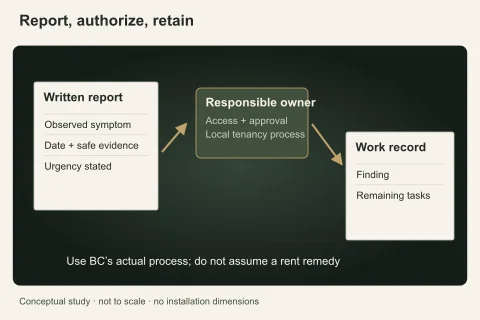
Prepare a secondary-suite planning brief that separates what you observed from what has not been established. State the municipality, known approval status, proposed fixture schedule, water source, wastewater destination and whether hot water will be shared. Identify unknown system information clearly. Include whether the home is occupied, who can authorize access, and whether a City or Township permit record already exists. Keep photographs limited to the affected system; omit tenant documents, entry codes and unrelated personal information. A useful request says what decision you need, rather than prescribing an unconfirmed repair.
LangleyPlumber.ca is a reference and human-reviewed request service, not a plumbing contractor or municipal office. A person reads a submitted request and replies; this does not book work, promise availability or provide emergency dispatch. Ask for coordinated building and trade scope, approval responsibilities, future isolation and maintenance records. Use the request form for planning and scope clarification after urgent safety needs have been addressed.
Questions people ask
Does existing plumbing prove a basement suite is approved?
No. Installed fixtures and an occupied space do not establish the approval status of a suite. Ask the municipality for the relevant records and process. Plumbing work should be assessed with the approved building use and broader project, rather than used as evidence that all occupancy or zoning questions are settled.
Are City and Township suite requirements interchangeable?
No. Use the authority for the property address and its own application resources. The Township has a dedicated suite page and the City publishes a separate suite guide and forms. Confirm current requirements for the actual proposal instead of borrowing an approval assumption from a neighbouring municipality.
What changes on a septic property?
The wastewater system must be identified and reviewed through the appropriate onsite-sewerage process. Adding interior fixtures does not establish the suitability or authorization of the existing system. Obtain the available records and appropriate professional assessment, and coordinate that work with municipal suite planning before treating the plumbing scope as complete.
Should shared hot water be documented?
Yes. Identify the equipment, dwellings served, access and shutdown responsibility. Ask the professional to establish the selection and regulated-trade interfaces for any changes. Keep the final arrangement and maintenance documents available to the landlord and authorized service personnel, without exposing occupant security or unnecessary personal information.
Sources and further reading
- Secondary Suites ↗ · Township of Langley. Checked 2026-10-02.
- Building Permits ↗ · City of Langley. Checked 2026-10-02.
- Onsite sewerage resources for property owners and authorized persons ↗ · Fraser Health. Checked 2026-10-02.
- Permits ↗ · Technical Safety BC. Checked 2026-10-02.
Confirm the current requirements with the responsible authority for the actual address and work. This reference does not replace site assessment or an official decision.