Start at the official current entry point
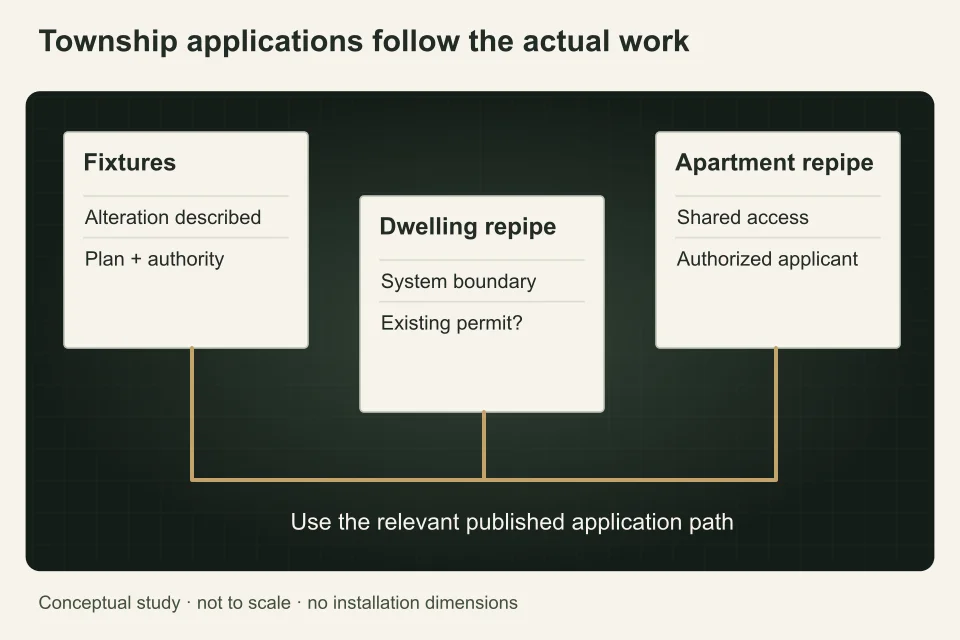
The Township’s Plumbing and Sprinklers page separates plumbing fixtures and devices, repiping a dwelling and repiping an apartment. It also provides guides and online application routes. Use this current landing page to locate the relevant process rather than relying on an old downloaded form or a contractor’s remembered procedure.
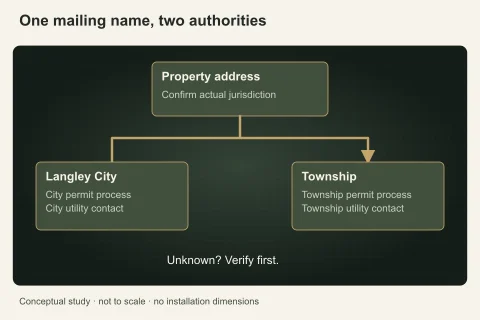
Confirm that the property is in the Township before using it. The City of Langley has a different application path. Write a short description of the project and retain the address, existing permit reference and proposed-system boundary together. The authority can clarify applicability from those facts, while a generic “plumbing job” description is less useful.
Check whether a building permit already includes plumbing
The Township states that plumbing is typically included with an existing building permit and asks applicants to check whether fixture charges have already been addressed. That does not mean every later change is covered. Compare the proposed work with the approved project and ask how any change should be recorded.
Keep application responsibility in the contractor or project agreement. If a designer, owner and plumber are all involved, identify who coordinates the record and responds to review questions. An informal assumption that another party “handles permits” can leave nobody tracking the approved scope or inspection sequence.
Describe an alteration, not only its symptom
The published application guide lists installations and upgrades, additional fixtures, waterline replacement, backflow devices and other system work. It also lists certain repair and replacement exceptions. Use those distinctions as questions about the actual scope, not a blanket instruction to work without approval. A repair can expand into a different alteration after investigation.
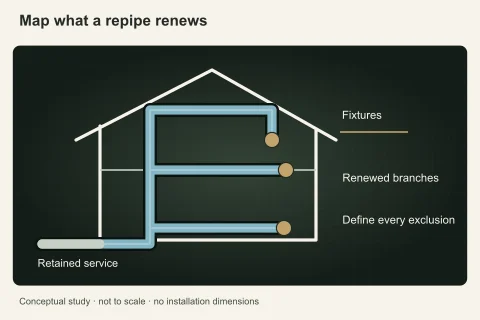
Prepare a retained-and-changed list. Mark new or moved fixtures, changed routes and equipment, and separate optional improvements from the minimum repair. If the contractor has not established the hidden condition, explain that uncertainty and ask whether an assessment phase is needed before the application is finalized.
Prepare the relevant documents
The guide describes project information such as fixture plans and, where applicable, professional drawings or authorization documents. A small project and a complex alteration may require different material. Ask the Township which documents apply instead of generating a construction drawing from an online planning sketch.
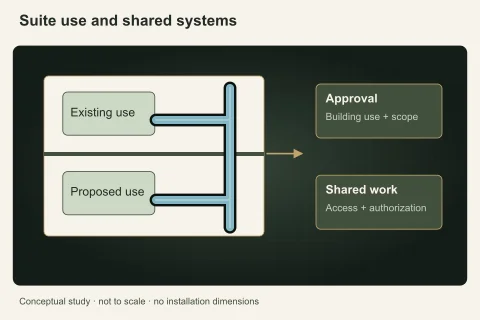
For a strata project, establish the authorized applicant and council approval route. For a broader renovation, coordinate the plumbing information with the building design. Keep a consistent version of the fixture and route schedule so quotations, submitted material and actual construction do not refer to different layouts.
Plan review, inspection and final records
Ask how the project’s required inspections are arranged and which stages must remain available for review. Assign the responsible party in writing. Where another trade restores finishes, communicate the actual inspection status and relevant photographs before covering. A booked inspection and a completed accepted stage are separate events.
Keep the final approval and completion information with the property record, including any scope changes and retained components. The permit process does not replace the contractor’s written installation or restoration scope. It also does not certify the present condition of original plumbing that was outside the approved project.
Prepare a Township permit-planning brief
Prepare a Township permit planning brief that separates what you observed from what has not been established. State the actual work, retained and moved fixtures, existing building permit and whether the project is a dwelling or apartment repipe. Identify the applicant and access authority. Include whether the home is occupied, who can authorize access, and whether a City or Township permit record already exists. Keep photographs limited to the affected system; omit tenant documents, entry codes and unrelated personal information. A useful request says what decision you need, rather than prescribing an unconfirmed repair.
LangleyPlumber.ca is a reference and human-reviewed request service, not a plumbing contractor or municipal office. A person reads a submitted request and replies; this does not book work, promise availability or provide emergency dispatch. Ask for the correct official application path, required documents and an explicit inspection and record-delivery owner. Use the request form for planning and scope clarification after urgent safety needs have been addressed.
Questions people ask
Does every plumbing repair require a Township application?
The Township guide lists particular exceptions and requirements, but applicability depends on the actual work. Describe the proposal and confirm any uncertainty with the authority. Do not use a broad repair label to cover additional fixtures, changed routes or a repipe that has a separate published process.
Should I apply twice if a building permit already exists?
Check the approved scope and the Township’s instructions first. Its plumbing page says work is typically included with an existing building permit and asks applicants to confirm fixture charges. A later change still needs clarification; avoid assuming either that a new application is always needed or that every change is already included.
Can an online tool produce my permit drawings?
The site’s planning tools organize questions and readiness; they do not create a compliant design or permit-ready drawing. Ask the Township and appropriate professional which documents the project requires. Use a sketch to communicate intent, while keeping professional design and the actual application distinct.
What records should the applicant keep?
Retain the approved scope, authority correspondence, applicable inspection or completion references and documented changes. Link them to the final contractor scope and restoration record. Keep proposed but uncompleted work separate so a later owner does not assume that everything shown in an early application was installed.
Sources and further reading
- Plumbing and Sprinklers ↗ · Township of Langley. Checked 2026-10-02.
- Plumbing Permit Application Guide ↗ · Township of Langley. Checked 2026-10-02.
- Division of repair duties in a strata ↗ · Province of British Columbia. Checked 2026-10-02.
Confirm the current requirements with the responsible authority for the actual address and work. This reference does not replace site assessment or an official decision.