Start with retained and relocated fixtures
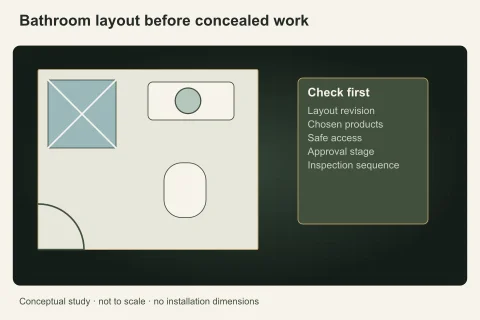
Make a room-by-room list of fixtures that stay, change in place, move or are added. Note the intended use and any accessibility requirement. A bathroom refresh with retained connections is not the same project as a new basement bathroom or relocated kitchen. Ask which decisions need a professional site assessment before the layout is finalized.
Include the existing system information available from drawings, permit records and earlier work. Mark unknown supply and drainage routes honestly. A sketch helps communicate the concept, but it should not be presented as a compliant design or used to justify ordering equipment before feasibility is established.
Budget the investigation phase
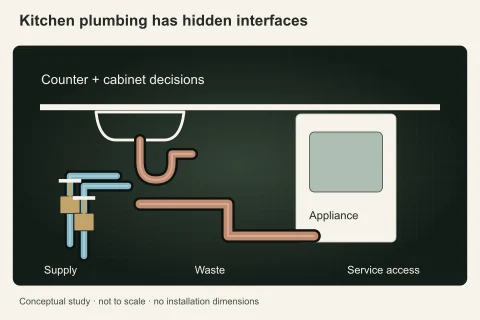
Concealed routes, available space and existing condition can affect the design. Ask what the first assessment establishes and whether controlled opening, camera work or other evidence gathering is needed. Keep this phase’s deliverables and authorization separate from a full renovation contract. A modest-looking change can have a difficult interface hidden behind a finished wall.
Decide who owns the resulting drawings or findings and how they are shared with the contractor preparing the construction scope. If the design changes after investigation, update the fixture schedule and comparison brief. Avoid comparing an early assumption-based figure with a later inspected scope as though only the price changed.
Create a product responsibility schedule
Identify who supplies taps, sinks, toilets, shower fittings and equipment. Record the proposed models and the date by which selections must be confirmed. Ask the installer to check compatibility with the actual layout and connections. Customer-supplied products need clear responsibility for delivery, missing components, defects and returns.
Keep optional appearance upgrades separate from the basic system work. A contractor’s allowance should describe what it buys and how substitutions affect the scope. Do not rely on a showroom package price to represent installed plumbing, waterproofing, electrical changes or the surrounding room restoration.
Allocate approvals and trade interfaces
Confirm whether the address is in Langley City or the Township, and ask its building department about the proposed project. Identify whether plumbing is part of a wider building permit. Gas and electrical equipment changes may involve a separate regulated-work path. Assign responsibility for applications, inspections and records in the written project scope.
Map the interfaces with framing, cabinets, countertops, waterproofing, tile, insulation and finish work. The plumbing budget should name those tasks even when another trade prices them. A project coordinator needs to know when inspections occur and which surfaces cannot yet be covered, rather than discovering that sequence after trades are booked.
Control allowances and changes
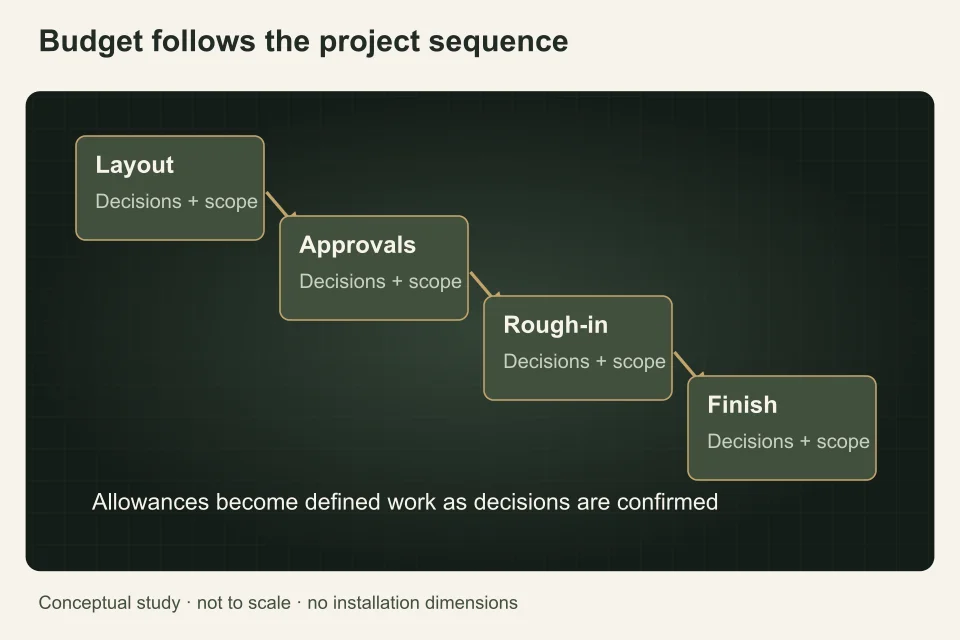
Separate the priced base scope, optional alternatives and unresolved allowances. For each allowance, say which unknown it covers and what evidence will settle it. Establish how a proposed change is documented and approved before work proceeds. This protects the project from a chain of informal selections that no longer match the original budget.
Maintain a current total showing approved changes and unfinished tasks, but do not treat it as a market benchmark for other homes. Compare contractor proposals using the same layout, product schedule and finish standard. Include applicable taxes and any separate approval or connection charges so the budget reflects the full planned project.
Prepare a renovation budget request
Prepare a renovation budgeting brief that separates what you observed from what has not been established. Include the fixture schedule, proposed layout, product responsibility, occupancy constraints and existing system information. Say which choices are fixed and which remain optional. Include whether the home is occupied, who can authorize access, and whether a City or Township permit record already exists. Keep photographs limited to the affected system; omit tenant documents, entry codes and unrelated personal information. A useful request says what decision you need, rather than prescribing an unconfirmed repair.
LangleyPlumber.ca is a reference and human-reviewed request service, not a plumbing contractor or municipal office. A person reads a submitted request and replies; this does not book work, promise availability or provide emergency dispatch. Ask for a phase-based scope showing investigation, construction, approvals, trade interfaces and restoration, with a written change process. Use the request form for planning and scope clarification after urgent safety needs have been addressed.
Questions people ask
How can I budget before every concealed pipe is known?
Use a clearly defined assessment phase and identify allowances for the unresolved parts. Record what each allowance covers and how it will be settled. The budget should distinguish decisions from assumptions; it should not pretend that a hidden condition is known simply to produce a fixed headline number.
Are moving a sink and replacing it in place comparable?
No. Relocation can change supply, drainage, venting, access and the surrounding finishes. A same-location fixture change has a different boundary. Give contractors the same retained-and-relocated schedule so each proposal prices the intended layout rather than an easier assumed arrangement.
Should permit fees sit in the plumbing budget?
They should be visible somewhere in the complete project budget, with responsibility assigned. Confirm the actual City or Township requirement and whether an existing building permit includes the plumbing scope. Keep gas or electrical approvals separate where relevant. Published fees are not evidence of a complete installed-work price.
Can this site provide a guaranteed renovation estimate?
No. It provides planning information and a human-reviewed request service. A contractor’s property-specific assessment and written scope are needed to price work. The useful output is a clearer list of decisions, evidence and interfaces, not an invented local range or a promise about attendance or completion.
Sources and further reading
- Home renovations ↗ · Office of Consumer Affairs, Government of Canada. Checked 2026-10-02.
- Plumbing and Sprinklers ↗ · Township of Langley. Checked 2026-10-02.
- Applications, Forms & Permits ↗ · City of Langley. Checked 2026-10-02.
- Permits ↗ · Technical Safety BC. Checked 2026-10-02.
Confirm the current requirements with the responsible authority for the actual address and work. This reference does not replace site assessment or an official decision.